Nicole B.


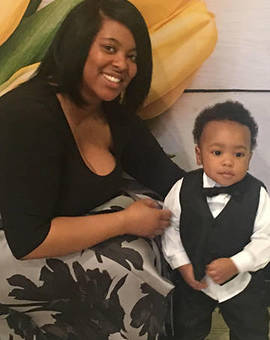
Nicole B. was ecstatic when she brought her son, D’Antoni, home from the hospital in January 2009. Nicole and her husband had three beautiful weeks with their newborn before he passed away in February, due to complications from surgery. Since then, Nicole has been vocal about her loss, giving talks to support groups and facilitating events. Here, she shares what she wants everyone to know about infant loss.

I’ve always tried to talk to my family members about their losses. People say it’s taboo to talk about it. But I’ve never shied away from it. I’ll ask them: “Do you need anything? How are you feeling? Let’s talk about it.” Those losses were personal because it was family, but I could still have distance with it. But, then it happened to me…

I had no issues at all in the pregnancy with D’Antoni. It was perfectly healthy. It wasn’t until he was born that I noticed he wasn’t eating properly. So, I told the nurses that I thought something was wrong. They kept pushing my concerns aside, not really taking me seriously. It was only when I told them that I was a nurse did they take any type of action. That’s what really upset me: what about these other black women who have less income, less education? They’re not going to be taken seriously either.

They finally did an X-ray and found out D’Antoni had a bowel obstruction. That is why I tell my patients this: “Speak up at all costs, especially when it comes to your child’s health. If one nurse doesn’t listen, you go to the next nurse, and then the next nurse.”

It is so sad because medical professionals tend to look over the African American population, as if we don’t know what we’re talking about. That stigma is there. You must get all these degrees for somebody to listen to you. A lot of family and friends did not know how to support me after my son died. They were there initially to hold and love on you, but after that, they all disappear — some friends, even family stopped talking to me. Looking back on this, I can understand why — all I talked about was my son. It can make people uncomfortable, but that was the only way I knew to process it.

In my experience, I tell them to say my son’s name. They believe they’ll upset me if they mention him, but the reality is the opposite. We want to hear our baby’s name. We want to remember him. We want to talk about our baby. My son’s name is D’Antoni. Use it. It took me a good three years after his death to feel strong enough to start advocating. That’s when I began giving talks and facilitating groups. I wanted to help people get through their grief because I know how heavy this road is.

I encourage everybody to get some kind of therapy. Again, a lot of black people think therapy is taboo, but it really helped me. I was one of the first attendees at the Cornerstone of Hope neonatal loss support group. They made a tremendous impact in our lives. They gave us the tools we needed to survive that period.

Now, it didn’t happen overnight. For me, it was a journey, but I still had those tools to refer to. I’ve never been medicated, but don’t shy away from that if that’s what you need. People don’t really understand grief. They think you should get over it. They always put a time limit on it. You have to get a hold on your grief, though, because grief can consume you if you let it. People say, “It’s been nine years, you’re still grieving over that?” Yes, I am. I didn’t bury a fish or dog, I buried my son.

As long as I live, I believe I’m going to always grieve. I love him.
Nancy K.


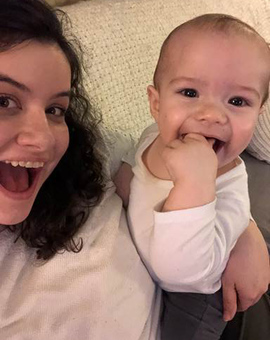
Nancy K. and her boyfriend, Pete, decided to join the CenteringPregnancy program midway through their pregnancy with their first child. In the program, expectant parents meet twice a month for two-hour sessions to discuss all things related to pregnancy and childbirth with a midwife — and each other. Research has shown that the group model improves outcomes for both the mother and her baby. Here, Nancy shares her experience in the program.

I’m the last one of my friends to have kids, so I had a general idea of what pregnancy would be like; but, until you go through it yourself, you don’t understand it fully. Once my boyfriend Pete and I found out we were expecting, we were just taking it all in, trying to soak in everything.

I learned about the CenteringPregnancy program fairly early on. My midwife, Amy, mentioned it at one of my earlier appointments and asked if we were interested. We both figured, “Why not?” It was definitely comforting to have a small group — that was the biggest benefit. We only had five couples with us, so it was very close-knit. Nobody knew each other prior, but everyone was so nice and open. From the start, it felt very comforting and welcoming.

In the first part of the session, people just started making small talk. The midwives leading the sessions never made me feel pressured to talk. They offered open-ended questions, with reassurance on things I was feeling, that I didn’t even know I was feeling. It helped take the walls down, with any of us who were still getting comfortable with the program. Maybe surprisingly, all of our different opinions and personalities meshed well.

"It was so calming, so open. It is a very relaxed environment to go through the pregnancy and know if what you’re experiencing is normal."

We had three ladies in our group who were due within a week of each other, and they were a little bit ahead of me. That was nice because I could see there was a light at the end of the tunnel with the things I was going through. They went through it first, and I could see eventually it subsides. Plus, you can bounce things off each other and know things you’re feeling are totally normal.

I felt really prepared for labor and ended up having a natural birth, like I planned. Of course, I didn’t know what contractions were going to feel like, but they taught us the different positions, the swaying, the walking, to help us get through them. They helped us understand that labor would be hard, but that everything happened in phases, that the hardest part — the contractions — eventually does stop. The more we talked about labor, the more it settled in and the more confident I felt.

I would say to anyone who’s thinking about Centering to go once and see how you feel about it. It gives you the best of both worlds — there’s private time with your midwife, and then there’s also group discussions that are really reassuring for this time in your life. It was so calming, so open. It is a very relaxed environment to go through the pregnancy and know if what you’re experiencing is normal.

My boyfriend came to all of the sessions. It opened up questions that we didn’t necessarily think about. It encouraged our communication and it helped us confirm exactly what we wanted at the birth. Centering really helped us go through the process together. The program helped decrease some of his feelings of helplessness because it gave him ideas of what to do and how to help. It helped us bond on a different level that maybe wouldn’t have happened if we had done traditional prenatal care.

Kate N.

Kate N.


As the mother of a toddler, Kate N. remembers the sleepless nights of new motherhood very clearly and how desperate new parents are to get some rest. As project manager of Safe Sleep Heroes, it’s her job to teach those new parents — and anyone else caring for a small child — how to ensure everyone gets a safe night of sleep. Here, she shares the importance of the ABCDs of safe sleep:

I’m a well-resourced mom, but I had no idea until I started working with First Year Cleveland that if you follow the ABCDs of safe sleep — putting babies to bed Alone, on their Back, in a Crib and Don’t smoke — the likelihood of them not waking up is super slim. Safe sleep recommendations have changed drastically over the past 20 years, and that’s why we must be so vigilant about making the message widespread. We now know what parents did for their children a generation ago can increase infant mortality.

We lose 21 babies a year in Cleveland, a full kindergarten class, to preventable, sleep-related deaths. You don’t want your child to be one of those babies. We want to decrease those numbers to eventually make sure that happens zero times.

In our work, we have a few mothers and grandmothers who show up to events to tell their story of losing their children due to unsafe sleep practices. These were children that were otherwise healthy, no health complications. But they were put to sleep in ways that weren’t safe for them and the unthinkable happened — they suffocated. We’re very fortunate that these women are brave enough to make sure it doesn’t happen to other families.

With families, we walk a fine line between not telling people they were wrong, like we’re judging their parenting or that we’re assuming they don’t love their children. Parents want their babies to be safe and they want them to sleep well, so we must tell them why the ABCDs of safe sleep are so important. Most parents by and large want to do what’s best for their children; we just have to make it accessible.

We do hear a small amount of pushback to the new guidelines, particularly about having babies sleep alone in their crib. Some parents are very into attachment parenting, where they sleep in the same bed with the child for bonding purposes. And that’s well-intentioned, but there are so many things that need to go exactly right for it to be safe. When it’s 2 a.m., and you’re completely exhausted, can you guarantee you can do all of those things correctly?

When you know better, you do better. Now that you have new information, what are you going to do with it? Safe Sleep isn’t just a program for parents. It’s for any and everybody. Because at some point, you either know an infant or influence the way they go to sleep. We’re looking at behavior change and that usually takes five to seven years. Everybody invested in turning these numbers around is working on a much shorter time frame. We’re looking for a movement, not a moment.

Paige R.

Paige R.


After learning about CenteringPregnancy®, Paige found a supportive group of women to help her through her pregnancy. Today, the friendships remain.

After I learned about CenteringPregnancy at a doctor’s appointment, the thing I really liked about it was that you can bounce ideas and questions off of other women who are expecting at around the same time. A doctor or midwife and nurse practitioner are also there so you get updated, expert medical knowledge too.

In our group, all the women were expecting babies only about two weeks apart. So, it basically felt like we were all going through the same things at the same time. We had a chance to clear up the myths we heard from other people. It made me feel really comfortable.

We had a chance to ask questions. A few people, for example, had “heard” that breastfeeding was really painful, or that formula is healthier, and both of those aren’t true (although breastfeeding can hurt a little at first … but breastmilk provides a lot of benefits to babies).

What I love most about CenteringPregnancy was that it was OK to say if we were wondering if something was normal or find out if some change was happening to other people at the same time. We could relate to things instead of worrying about them. It was very informative.

One thing we noticed was that there were a lot of differences in what people did from generation to generation. Family members sometimes still try to do what they were told to do a long time ago, which was what doctors said then but isn’t recommended anymore. Grandparents and parents were doing their best at the time and using the best information available then, but when you know better, you can do better, with more recent information.

Safe sleep was an important area that has changed. Now we know that babies should be alone, on their back, in a crib (or pack-n-play), and no one should smoke in a house where a baby spends time. They even told us that if moms or dads need a safe place for the baby to sleep, there are programs where you can get free pack-n-plays.

We had a chance to have parents and support people come to join sessions, and they were excited to learn new ways to do things and to hear answers to their questions from medical professionals.

All of the moms were so supportive. We could talk about what did or didn’t work for us during pregnancy and even after our babies were born. I still talk to the moms from my group almost every day! We share pictures of our babies and what they’re doing at each stage now and share ideas for baby food or other things. Women who had a baby 20 years ago or two years ago might forget some of the little details of how they were feeling at each little step, but we are all going through it together right now, at the same time. We really encourage each other.

Christin F.

Christin F.


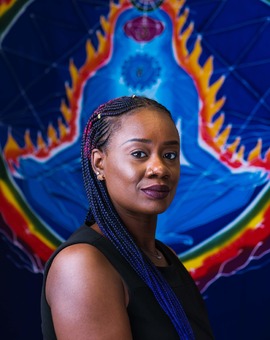
Christin F. gets daily affirmations that her work with Birthing Beautiful Communities (BBC) is changing lives in Cleveland. The 32-year-old founded the organization in 2014, bringing together a collective of black doulas to combat the city’s dire infant mortality rates among black babies.

Over the past few years, the organization has grown from serving a handful of women to more than 500 in Cuyahoga County. The BBC model improves health outcomes for both mother and baby by providing women with doulas to assist them throughout their pregnancy and their child’s first year of life.

Her focus with First Year Cleveland is understanding the role race and maternal stress play in infant deaths. If you ask Christin about the organization’s five-year plan, there are intentions to expand far past Northeast Ohio. But, for now, the impact is just what the region needs.

I’ve known that I wanted to be a midwife since I was 16. I carry that passion into the work I’m currently doing: making sure women have access to woman-centered care. If that care can’t be delivered by an institution such as a hospital, then there should be a village around the mom to support her as she successfully carries out her pregnancy and labors through the birth of her child. That village should also stay on deck that first year of her child’s life when she so desperately needs it.

When I had my first child (as a student at Kent State University), I was well-supported by my family — both my family at home in Cleveland and my friends at college. We all lived off-campus together, so we were a little family of our own. Now, I certainly had my moments, especially within the first three months, where I struggled during that adjustment to life with a new baby. Nobody talks about that with you. You’re prepared during the pregnancy because you get all this information at your prenatal visits, but after the baby gets here, nobody tells you, “Hey, it’ll be difficult to take a shower or find time to eat.”

I’ve always felt that, as a society, we have not been supportive of reproduction. I just find it to be so odd that systems and policies are not set up to receive families. Even though I didn’t realize my dream of becoming a midwife, I pursued work as a doula, which led me to found Birthing Beautiful Communities.

Birthing Beautiful Communities is designed to take in moms who are at least 16 weeks pregnant — the sooner, the better. First, we assign each mom a perinatal support professional. They do so much more than just attend prenatal visits or the labor and delivery. They are literally embedded into the daily lives of these women, for at least 80 weeks. Their scope is far beyond what people imagine when they think of a doula. We have weekly classes, Sisters Offering Support, for our moms, which are designed to help the women identify what they’re experiencing — stress, depression, anxiety, panic and fear — and give them tools to navigate these experiences or remove them altogether.

The majority of women who experience these things don’t know what to call them. They may say “Oh, I was tripping” or “I’m just mad.” Part of the problem is if they can’t articulate what they’re feeling, then it’s hard to address it. Addressing anxiety is different than addressing fear. It’s important that they identify those feelings, so they can get the proper solution. The best part of this work is seeing women becoming more empowered than when they started off. We see women from all walks of life, all different socioeconomic backgrounds. But the consensus has been that they need this continuous support in their lives. It does increase your self-esteem and your confidence when you know you have someone you can reach out to, who can get you back on track.

I love seeing women come out of a place of hopelessness to a place of optimism, because they have also met other women who are only here to help them and not judge them. Walking into this space for them is a relief. They come here and think, “I can be who I am.”

"This is literally my life’s work. This is what I was born to do. I understand that, I respect that — and I love it."

When I hear stories from the families, or when we get a call from another state talking about replication, all these little things remind me how necessary our work is. For example, two weeks ago, we got a call from one of the hospitals. They were referring a patient to us. The social worker called 28 agencies before she called ours. Things like this remind me why we exist. This need is why we’re building our own campus with 20 units of short-term housing: the systems are overburdened with people. We haven’t figured out how to build pipelines.

We know that black infant mortality is not a poverty problem — women of all socioeconomic levels and backgrounds are at the same risk. There are two main things that black infant mortality boils down to — racism and patriarchy. Those are the drivers of it. There is not woman-centered care in this country, and women historically have not made the policies that impact families.

Part of the reason we see these higher rates in black communities is a lack of representation in these medical spaces. Our history has prevented us from having opportunities and resources, so now there’s a lack of black doctors and midwives. Across Cuyahoga County, we only have three black midwives who are licensed to catch babies. That’s inequity. Now, black women are saying, “The doctors aren’t listening to us.” They don’t feel comfortable with their providers, but they don’t have many options. That’s because most of the providers are white males. You’ve got to even the playing field, and then we can talk about what’s going on with our policies.

See, there’s a difference between programs and pipelines. Programs are supposed to be short-term. Programs aren’t meant to last 30 years. That’s what we’ve gotten wrong. Pipelines are used to sustain people. You’re supposed to equip people with the tools they need to survive so they have the tools to support their family. If racism and patriarchy aren’t addressed in our programming, then we’re not moving toward a place of equity. Everything else we do is null and void. It’s only going to change what we see today, but not what we see in the future.